

Introduction – Why Renters Insurance Isn’t Just a Formality
I used to think renters insurance was just a checkbox on my lease — a bureaucratic “must-have” that no one really reads about. Honestly, I barely considered it when I moved into my first apartment. But after a series of small disasters, misunderstandings, and one particularly ugly theft, I quickly realized renters insurance isn’t optional — it’s essential.
In this guide, I’ll share my personal experiences, mistakes, and lessons learned. I’ll also cover common pitfalls that renters across the U.S. face, compare different types of plans, and offer practical tips you can use to avoid the traps I fell into.
My First Experience – Falling Into the Trap of Cheap Insurance
When I moved into my downtown apartment, I was a budget-conscious renter. I signed up for the cheapest plan I could find, thinking: “It’s just stuff. How bad could it get?” My deductible was $500, and the coverage limit was minimal — enough for a few small electronics.
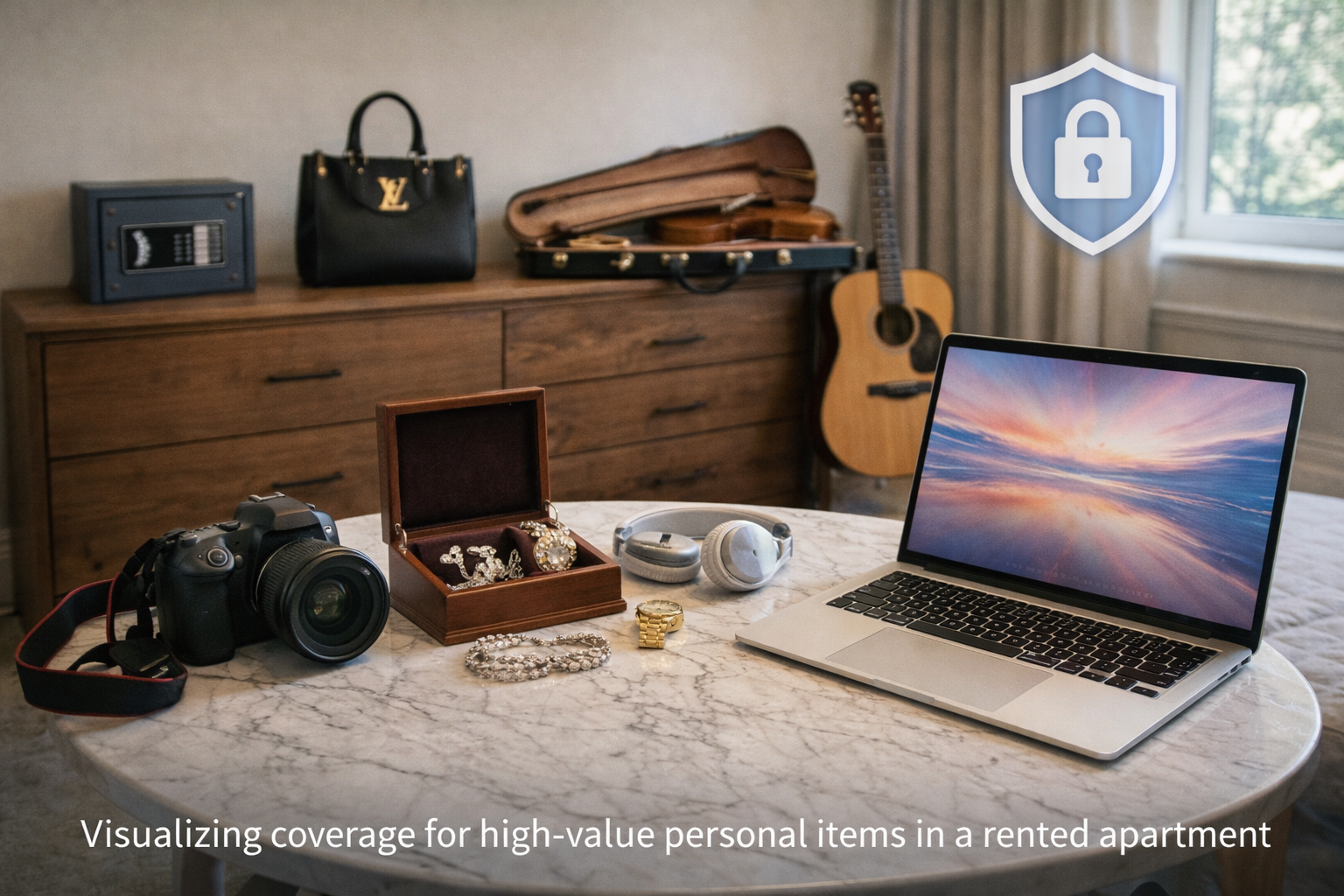
Everything seemed fine… until I came home one evening to find my backpack, laptop, and camera stolen. The panic was real. I thought the insurance would magically cover all my losses. Instead, I got emails and calls asking for receipts, serial numbers, and proof of ownership — much of which I didn’t have.
The payout? Barely enough to cover my deductible. I felt frustrated, foolish, and tricked. It was my first hard lesson: cheap renters insurance often leaves you exposed when you most need protection.
Common Pain Points Renters Across the U.S. Experience
Over time, talking with fellow renters and browsing forums, I noticed recurring issues:
| Pain Point | Personal Experience | U.S. Renter Trend |
|---|---|---|
| Low coverage limits | My laptop’s replacement cost exceeded the limit | Many renters don’t realize standard plans cap payouts for electronics/jewelry |
| High deductibles | $500 deductible wiped out most of my claim | Choosing high deductibles to save money often backfires |
| Confusion about exclusions | Flood damage ruined my floors — not covered | Standard renters insurance rarely covers floods, earthquakes, or mold |
| Claims denied for documentation | Threw away receipts → claim partially denied | Documentation is critical — lack of it is the top reason claims fail |
| Liability misunderstandings | Guest slipped on my rug → lucky I had liability coverage | Liability coverage protects renters from lawsuits involving guests or accidents |
This table helped me visually compare what went wrong in my plan versus best practices, which I now use to help other renters understand potential risks.
Understanding Renters Insurance – From My Perspective
Renters insurance can feel like a foreign language at first. Here are some key concepts I had to wrap my head around:
1. Personal Property vs. Liability Coverage
-
Personal Property: Protects your belongings from theft, fire, and some damage. I learned the hard way that high-value items require extra riders to get full replacement coverage.
-
Liability: Covers injuries to others in your apartment. When a friend tripped over my rug, this coverage saved me from paying thousands in medical bills.
2. Theft and Vandalism Coverage
After my first break-in, I realized documentation is everything. Serial numbers, photos, receipts — without them, insurers might deny claims.
3. Deductibles Are a Double-Edged Sword
Lower deductibles cost more monthly but pay off when claims happen. Higher deductibles reduce premiums but can make claims almost pointless. I made this mistake once, never again.
Comparing Different Renters Insurance Plans – A Real-World Analysis
After my first disaster, I started actively comparing plans. Here’s a simplified breakdown:
| Plan Type | Pros | Cons | My Experience |
|---|---|---|---|
| Basic Low-Cost Plan | Cheap monthly fee | Low limits, high deductibles | Felt like a trap during first claim |
| Mid-Range Plan + Riders | Better payouts for electronics/jewelry | Slightly higher cost | Smooth replacement for my camera after adding a rider |
| Comprehensive Plan | Highest coverage, lower hassle in claims | Most expensive | Worth it for peace of mind |
| Student-Focused Plans | Budget-friendly | Limited coverage, some exclusions | Good for small apartments, but limited for high-value items |
Looking at the pro/con table helped me plan coverage according to actual risk rather than just cost. I realized that sometimes spending a few extra dollars monthly prevents financial nightmares later.
User Tips and Practical Advice Based on Personal & Nationwide Experience
-
Document Everything Immediately
Photos, serial numbers, receipts — even minor items. If a claim happens, these are your strongest evidence. -
Know What’s Not Covered
Floods, earthquakes, mold — most plans exclude these. If you live in a risk-prone area, consider a separate policy. -
Understand Deductibles
Balance monthly cost with realistic claim potential. I learned $500 was too high for my apartment in the city. -
Add Riders for Expensive Items
My photography gear would have been nearly worthless under a standard policy. A $10/month rider saved me thousands. -
Compare Multiple Providers
Customer service, claim process, and payout fairness vary widely. Websites like Policygenius or direct agents can help you compare effectively. -
File Claims Promptly and Properly
Police reports, photos, and written documentation matter. Delays or missing paperwork can mean partial or denied claims.
Lessons Learned – How Experience Changed Me
I used to resent renters insurance — seeing it as a waste of money. Now, I view it as financial peace of mind. The first claim was frustrating and emotional, but it taught me:
-
Never underestimate the importance of high-value item riders
-
Deductibles must be chosen realistically
-
Documentation is critical
-
Claims are easier to manage if you understand the process beforehand
Later, when my laptop was stolen again after I upgraded my plan, the claim went smoothly. The payout was fair, the deductible manageable, and I didn’t have to fight every step. That relief was priceless.
Conclusion – Practical Advice & Emotional Reflection
Renters insurance may seem boring or unnecessary, but here’s what I know now:
✅ Don’t pick the cheapest plan blindly — check limits
✅ Document all belongings — now, not after a disaster
✅ Choose realistic deductibles — balance cost vs claim usability
✅ Add riders for high-value items — small monthly cost, huge benefit
✅ Understand exclusions — flood, earthquake, mold
✅ Compare multiple providers and read reviews
✅ File claims promptly with proper documentation
Insurance isn’t fun. Talking about premiums and limits isn’t fun. But when something goes wrong, it’s the difference between a minor inconvenience and financial disaster.
My journey was messy, frustrating, and emotional — but it’s also the reason I’m confident and prepared today. That peace of mind? Absolutely worth every dollar.




Leave a Reply